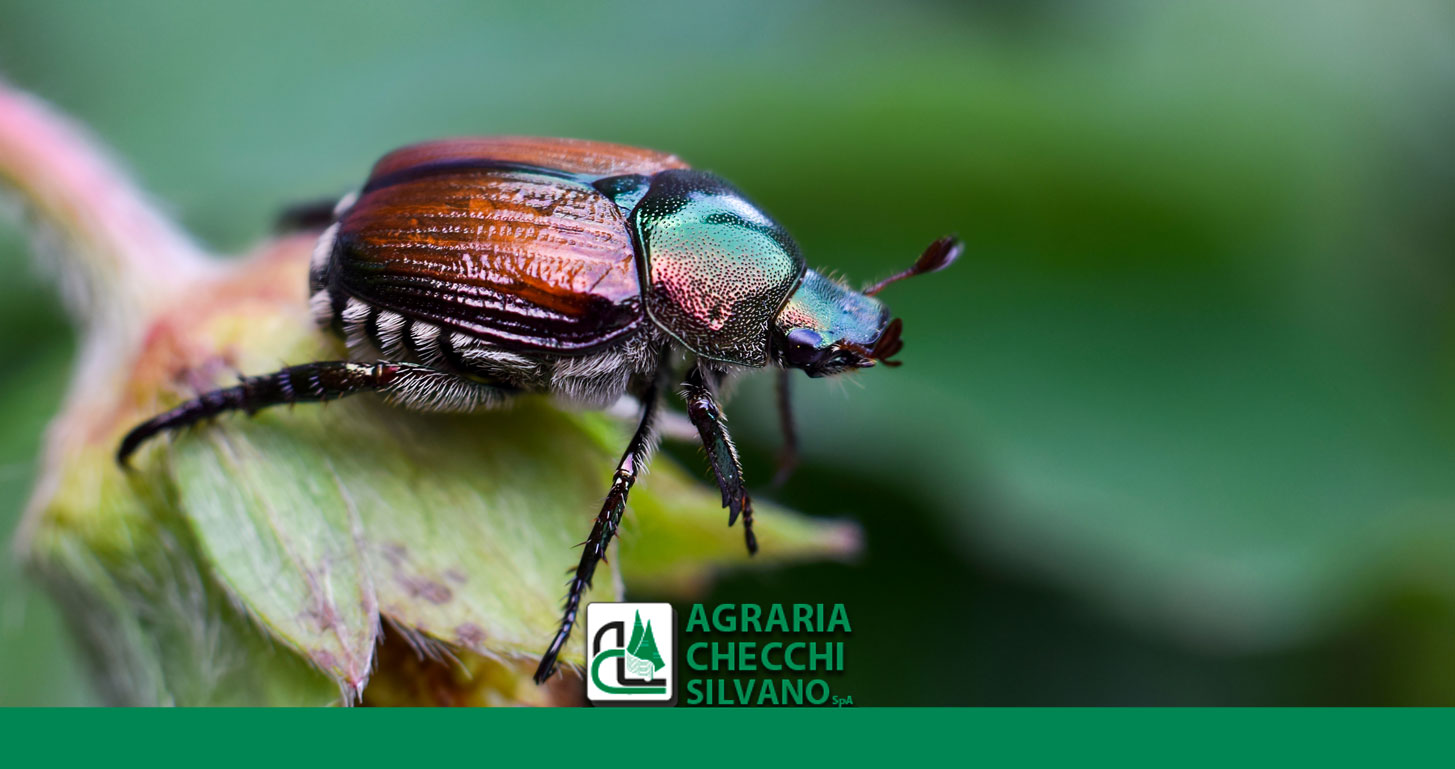
Popillia japonica, commonly known as the Japanese beetle, is one of the insects of greatest plant health concern for the agricultural and nursery sector. Originally from the Far East, it is now considered a priority pest at European level because of how easily it spreads and the damage it can cause to many crops.
An extremely polyphagous insect
Popillia japonica can develop on more than a hundred plant species, affecting agricultural, ornamental and forest crops. The main host plants include:
- grapevine;
- fruit trees;
- hazelnut;
- ornamental plants such as roses and dahlias;
- vegetables;
- maize, soya and lucerne.
This wide range of hosts makes constant monitoring essential.
Damage caused by adults and larvae
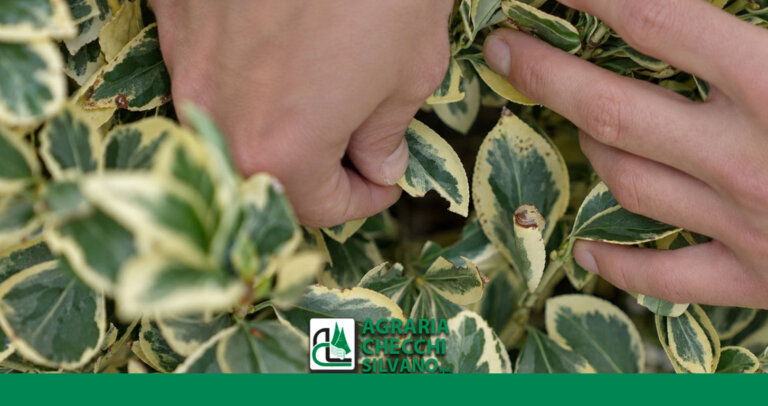
The adults concentrate on the above-ground parts of plants, feeding on the leaves and causing extensive damage that reduces the photosynthetic surface.
The larvae, on the other hand, are often the most damaging stage of the life cycle. They live in the soil and feed on the roots, impairing the uptake of water and nutrients. The consequences are easy to recognise:
- yellowing of the foliage;
- slowed development;
- drying out;
- loss of crop vigour.
In lawns, large dried-out patches can appear, often made worse by animals digging in the soil in search of the larvae.
When to monitor
The adults are generally present in summer, between June and August, while the larvae continue to develop in the soil until the following spring. That is why monitoring is one of the most important tools for planning control measures.
The importance of a preventive strategy
A sound protection strategy is not limited to treatment, but starts with observing the crop and monitoring the insect. Spotting Popillia japonica early makes it possible to act at the most effective time, reducing damage and optimising treatments.
Agraria Checchi at your side
Every crop has different needs. That is why Agraria Checchi’s technicians are available to help farms and nurseries draw up a customised monitoring and protection plan.
We look forward to seeing you at our shop in Pistoia, at VIA BONELLINA 57.
For more technical information and advice on use, contact us.