Deformed leaves, damaged shoots, slowed growth: these are some of the signs that may point to pests on ornamental plants. In professional nursery production, recognising these symptoms early is essential to prevent crop damage and protect the quality of production.
Aphids, red spider mites, thrips, caterpillars, scale insects and vine weevils are among the main pests that can affect ornamental plants, both in greenhouses and in outdoor nurseries.
How do you recognise them? What damage do they cause? And what strategies can we use to keep them in check?
Let’s look at the features of the main pests and the role of prevention and biocontrol in managing plant health in the nursery.
The main pests of ornamental plants
Pests can cause very different kinds of damage: some feed on sap or cell contents, others eat away leaves and shoots, while others damage the root system.
Knowing the typical symptoms of each group helps you spot infestations early and set up the right control strategy.
Aphids: deformed leaves and honeydew
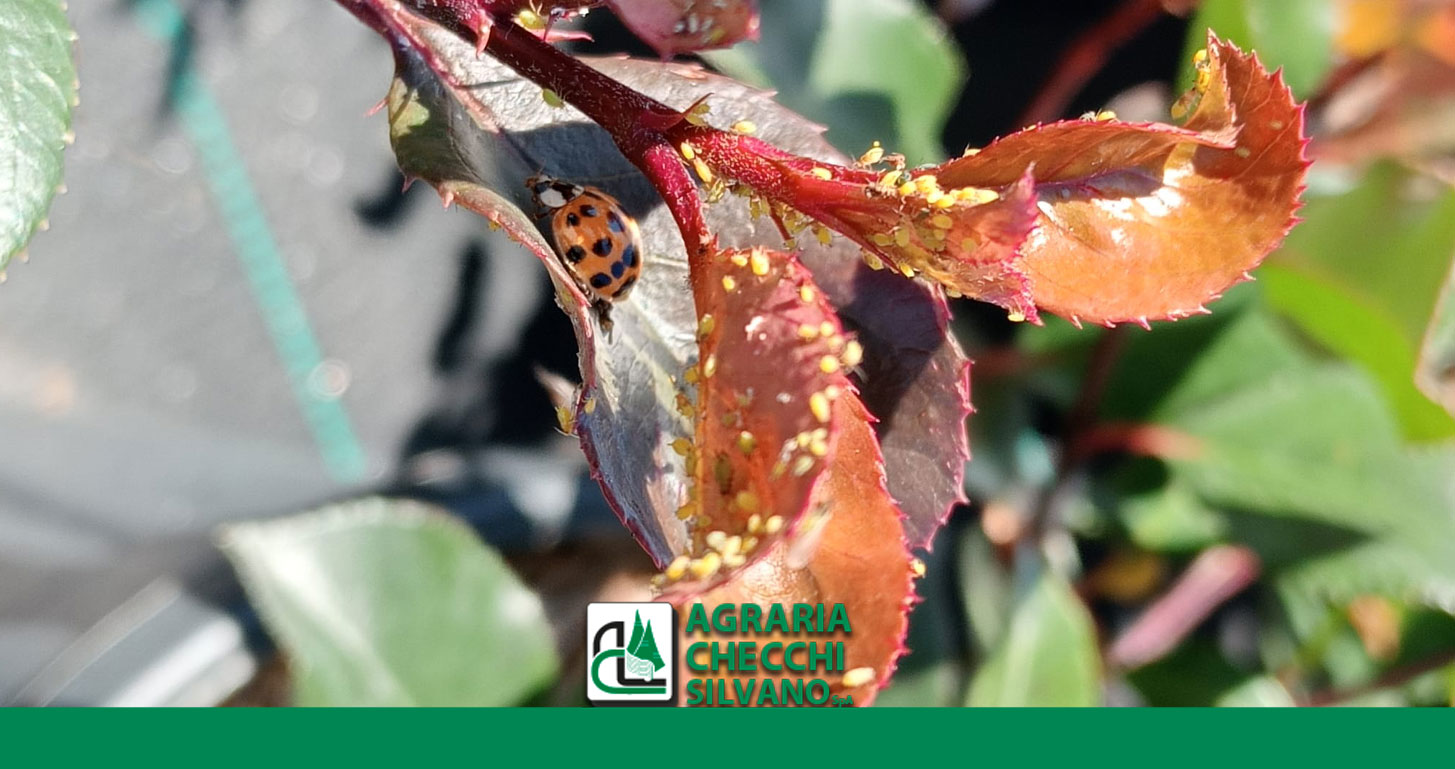
Aphids are among the most common pests in ornamental nurseries. They often appear in spring, when they colonise the most tender shoots and the undersides of leaves. Some species can return in late summer, when weather conditions become favourable again.
They can be recognised by colonies of small insects, usually green, yellowish, brown or blackish.
The main symptoms are:
- Curling and deformation of the leaves.
- Slowed development of young shoots.
- Honeydew, a sticky, sugary substance.
- Possible sooty mould on the foliage.
Infestations can be encouraged by young, tender growth, for example after excessive nitrogen fertilisation.
Monitoring the growing tips is particularly important to spot the first colonies and act before they spread.
Red spider mite: stippling and yellowing leaves
Red spider mite, commonly associated with the mite Tetranychus urticae, is particularly troublesome when temperatures are high and relative humidity is low. It can affect many ornamental species, especially under protected cultivation. Unlike aphids, these mites are very small and often hard to see with the naked eye.
The first sign is usually small pale specks on the leaf surface, caused by the mites feeding.
As the infestation progresses, you may see:
- Yellowing and changes in leaf colour.
- Leaves drying out and dropping early.
- Fine webbing, especially in heavier infestations.
- Slowed growth and decline of the plant.
To detect them, it helps to examine the undersides of the leaves carefully, possibly with a magnifying glass.
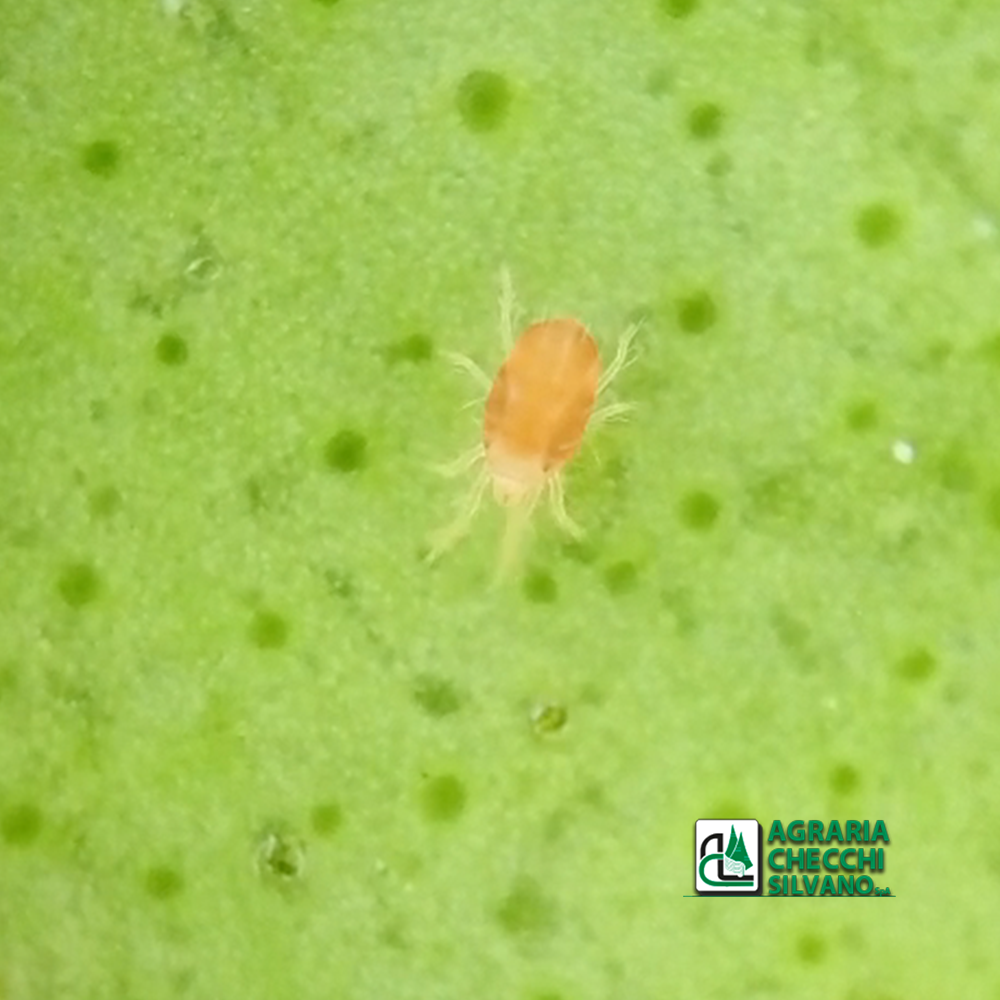
Pictured: red spider mite
Thrips: silvering and deformed shoots
Thrips are small insects that can cause significant damage to ornamental crops, particularly in greenhouses and protected production.
They feed on plant tissue and can attack leaves, shoots and flowers. The most typical symptoms include silvery patches on the leaf surface, small dark specks of excrement and deformed young growth.
With significant infestations you may also see:
- Curled or deformed leaves.
- Cosmetic damage to flowers.
- Slowed shoot growth.
- Localised necrosis on affected tissue.
Some thrips species can also transmit viruses to plants, which makes monitoring even more important. Coloured sticky traps can help detect adults, while inspecting the plants directly remains essential to assess the infestation.
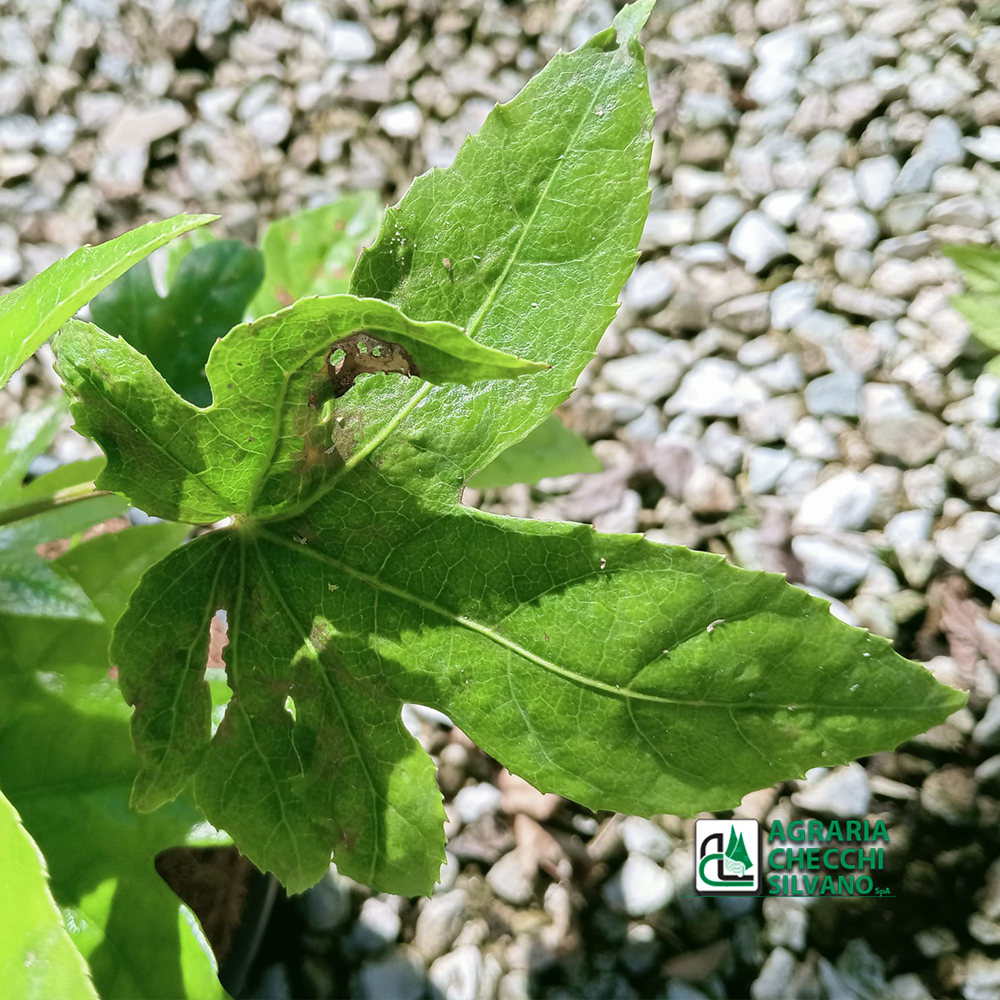
Pictured: leaf damaged by thrips
Caterpillars: eaten shoots, chewed leaves and dieback
Pests of ornamental plants also include the larvae of various moth species, which can damage leaves and shoots.
Depending on the species, the symptoms can be very different.
Shoot moths
Some moths attack the young growing tips, inside which the larvae feed. The shoots may bend over, wilt and then dry out, compromising the plant’s development.
Margaronia
The larvae of some species commonly referred to as Margaronia can eat away leaves and shoots, often sheltering between parts of the foliage joined by fine silk threads.
Their feeding can cause deformation and damage to the growing tips.
Box tree moth
The box tree moth (Cydalima perspectalis) is one of the best-known moths for the damage it causes to box plants.
The larvae feed on the leaves, causing feeding damage that can develop into very severe defoliation.
Typical signs include silk threads between leaves and twigs, piles of frass and progressive drying of the affected parts.
Checking young shoots and the inner foliage of the plants is important for detecting larvae early.
Scale insects: waxy secretions and sooty mould
Scale insects include many species that can infest the leaves, branches and stems of ornamental plants.
Some, such as mealybugs, are easy to recognise by their whitish waxy secretions, like small tufts of cotton wool.
Other species have protective coverings of different shapes and colours.
Damage can include:
- Yellowing and weakening of the foliage.
- Slowed growth.
- Honeydew, in the species that produce it.
- Sooty mould developing on the honeydew.
Advanced infestations can be particularly hard to manage, partly because the protective coverings of some species make it harder to reach the insects.
That is why it is important to spot colonies early and identify the species present.
Vine weevil: notched leaves and root damage
The vine weevil is a particularly insidious pest in ornamental nurseries because it can damage the plant both as an adult and as a larva.
The adults, mainly active at night, feed on the leaf margins, leaving the characteristic semicircular notches.
The larvae, on the other hand, live in the soil or growing medium and feed on the roots.
This can cause:
- A reduced root system.
- Slowed growth.
- Wilting and decline.
- In the most serious cases, the death of the plant.
Root damage can be hard to detect in the early stages, especially in container-grown crops.
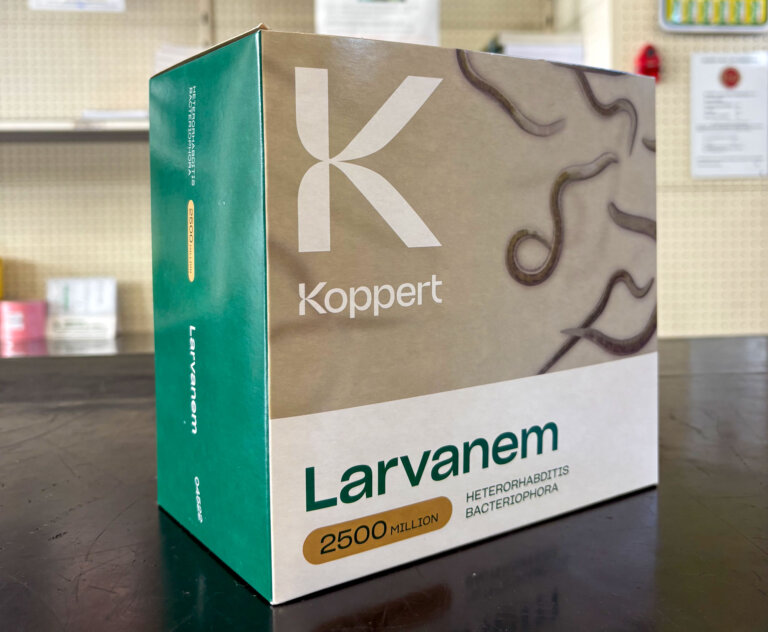
To control the larvae of some vine weevil species, entomopathogenic nematodes can also be used, choosing the appropriate solution and respecting the application conditions.
How to prevent infestations in the nursery
Recognising pests is important, but good plant health management shouldn’t start only when the damage becomes obvious.
Prevention is one of the key tools for keeping infestations under control.
An effective strategy starts with a few essential activities:
- Regular crop monitoring, to detect the first outbreaks promptly.
- Identifying the pest, because different organisms require specific control strategies.
- Assessing environmental conditions, such as temperature, humidity and ventilation.
- Good crop management, avoiding stress conditions that can make plants more vulnerable.
- Planning treatments around the life cycles of the harmful organisms.
The aim is to act in a targeted way, so that infestations that start small don’t turn into widespread problems.
Biocontrol in the nursery: using natural enemies
In recent years biological pest control has become increasingly important in ornamental nurseries too.
At Agraria Checchi we have developed strategies that integrate natural enemies into crop protection programmes, gradually extending these techniques from greenhouses to outdoor container crops.
The tools available include:
Beneficial insects and predatory mites
Predators or parasitoids that help control specific pests, such as aphids, thrips and harmful mites.
Entomopathogenic nematodes
Microorganisms? No: these are tiny multicellular organisms, used to control certain insect larvae in the soil or growing medium when conditions suit their activity.
Insect traps
Tools used to detect harmful insects and follow their population trends, providing useful information for planning treatments.
Pheromones and mating disruption
Systems that use specific chemical signals to interfere with the mating of certain insect species, where techniques are available and applicable to the crop concerned.
These solutions can be combined with antagonistic microorganisms, natural products and targeted plant protection treatments, in line with authorised uses.
Why biocontrol needs a strategy
Biocontrol is not simply a matter of releasing a beneficial insect or applying a biological product.
Its effectiveness depends on correctly identifying the pest, the timing of application, environmental conditions and compatibility with the other planned treatments.
That is why it is essential to plan the work and check the results over time.
Agraria Checchi’s experience has shown that, in certain situations, integrating biocontrol can allow plant protection products to be used in a more targeted way and, in some cases, chemical treatments to be reduced significantly.
An approach that can also help preserve the beneficial organisms already naturally present in the growing environment.
Integrated protection of ornamental plants: a tailored approach
Every nursery is different: the species grown, the way production is organised, environmental conditions and plant health issues vary from one business to the next.
That is why there is no single control strategy that works for every crop.
Integrated pest management combines prevention, monitoring, cultural techniques, biological control and, when necessary, authorised plant protection products.
The aim is to keep pest populations under control, protecting the quality of production and making treatments more efficient.
Need help protecting your nursery?
The technicians at Agraria Checchi work alongside nursery professionals to identify plant health issues and define strategies for prevention, monitoring and biocontrol.
Contact us to find the best strategy for your crops.
📍 Agraria Checchi – Via Bonellina 57, Pistoia.
***Plant protection products must be used in line with their authorised uses and the instructions on the label.