Late blight is one of the worst diseases that can affect tomato plants; in certain weather conditions it can destroy the entire crop. That is why it is important to prevent it with specific practices and products.
It is a fungal disease, caused by a pathogen whose scientific name is Phytophthora infestans. As well as tomatoes, it can affect other vegetables, particularly in the nightshade family (potatoes, aubergines). There are also other strains of downy mildew that attack other crops, such as vines, roses and other ornamental plants.
To protect the vegetable garden you can act preventively. Even once blight appears, if you act in time you can contain it, including with treatments approved for organic farming. In preventive protection, the typical anti-blight treatment is based on copper products.
The cause of the disease is a microorganism almost always present in the soil. When this pathogen multiplies, it can attack the plant significantly and the disease appears.
The main factors that trigger it are moisture and temperature:
• Too much water, when it stagnates in the soil and particularly when it sits on the above-ground parts of the plants, is the main cause of tomato blight.
• Warmth, and especially temperature swings, activates the microorganism.
When the right temperature combines with high humidity in the vegetable garden, plants fall ill easily. Prevention and protective treatments for tomatoes should be carried out at these times. The worst period is generally late spring (May and June) and above all late summer (late August).
The disease first appears on the tomato leaves, starting with localised yellow patches. The patches then turn brown and over time the leaf dries out completely.
Blight then goes on to attack the stem and fruit, ruining the harvest and killing the plant.
Preventing late blight in tomatoes rests on a few key points:
• the soil: avoid waterlogging after rain and avoid over-watering, because too much water encourages blight, particularly if it sits on the leaves
• no excess nitrogen
• encourage air circulation between plants
• remove diseased parts of the plant
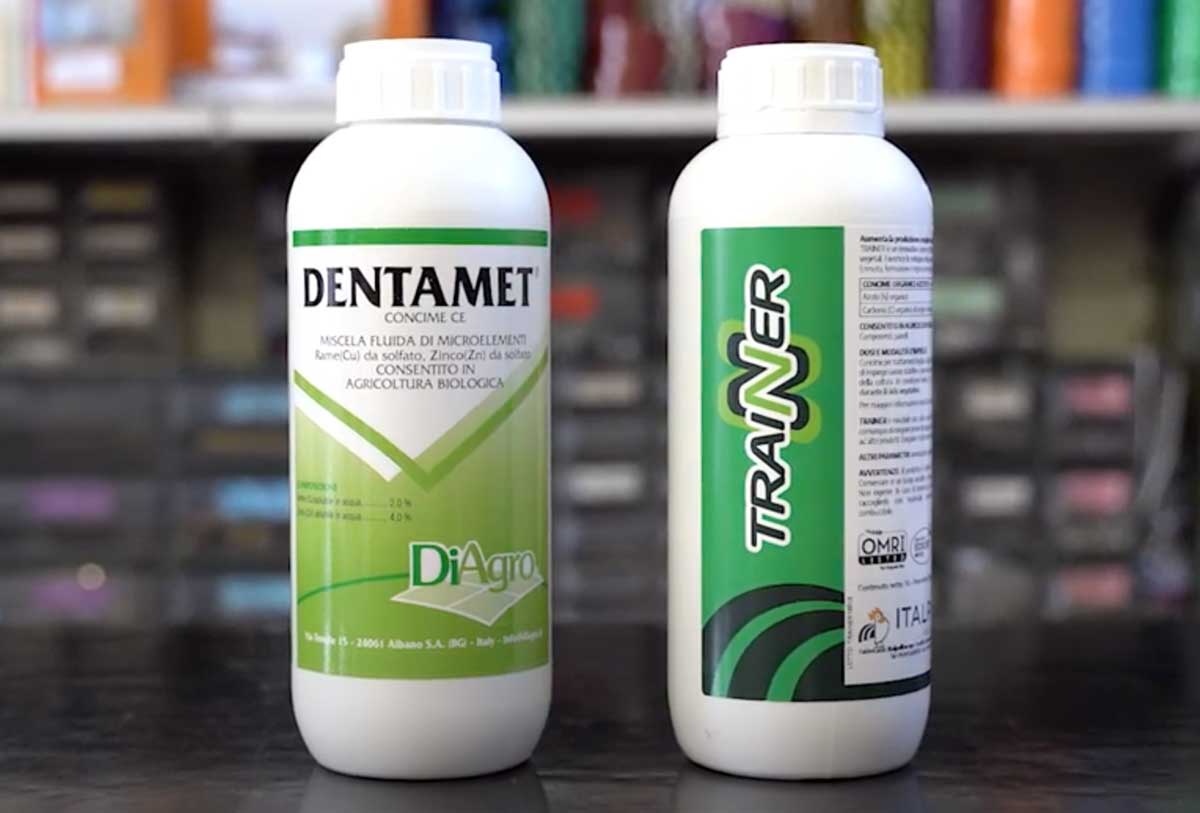
An interesting product for fighting this disease is DENTAMET, a mixture of copper and zinc that can be applied either as a foliar spray or through fertigation. It has both a protective and a fertilising action. I recommend using it mixed with TRAINER, an organic fertilizer rich in amino acids.
For more information on our plant protection products and how to use them, contact us.